
Alp Arslan: The Lion of the Seljuk Empire
Introduction
Alp Arslan, meaning “Heroic Lion” in Turkish, was one of the most powerful figures in Islamic and Turkish history. As the second sultan of the Great Seljuk Empire, his reign from 1063 to 1072 was marked by military brilliance, political reform, and strategic expansion.
Early Life and Rise to Power
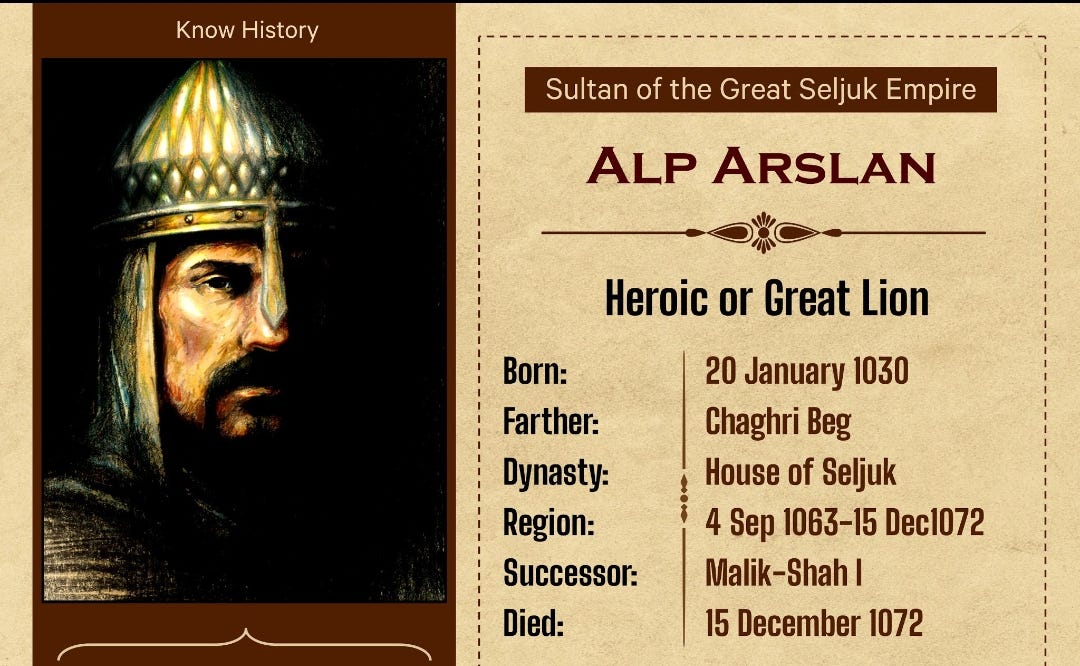
Born around 1029, Alp Arslan was the son of Chaghri Beg, a prominent founder of the Seljuk dynasty. From a young age, he was trained in the skills of warfare and leadership. After the death of his uncle, Tughril Beg—the first Seljuk sultan—without a male heir, Alp Arslan was selected as his successor.
His early rule was not easy. Internal rebellions and rival claims to the throne threatened the stability of the empire. However, Alp Arslan, with his unmatched military acumen and political wisdom, crushed opposition and unified the empire under his rule.
The Battle That Changed History: Manzikert (1071)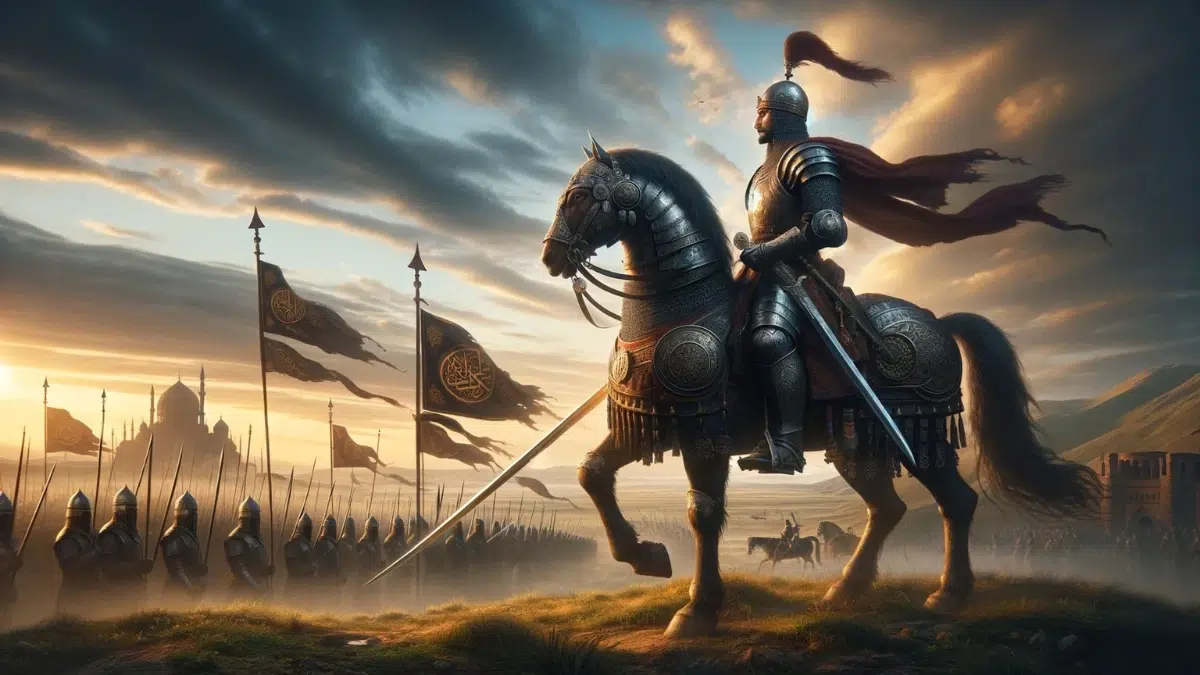
One of Alp Arslan's most defining moments came in 1071 at the Battle of Manzikert, near modern-day Malazgirt, Turkey. Facing the mighty Byzantine Empire led by Emperor Romanos IV Diogenes, Alp Arslan’s forces were outnumbered but highly disciplined.
Through tactical maneuvering and inspiring leadership, the Seljuks achieved a stunning victory. Emperor Romanos was captured—a moment that shocked the Christian world. In a surprising turn, Alp Arslan treated him with dignity and eventually released him in exchange for a treaty and ransom.
Impact of the Victory
The triumph at Manzikert was more than just a battlefield win—it reshaped the geopolitical map of the region. The doors of Anatolia were now open to Turkish and Muslim migration. The Byzantine Empire, significantly weakened, lost its grip on much of the territory.
This victory laid the groundwork for future Turkish states in the region, including the powerful Ottoman Empire that would rise centuries later. For Muslims and Turks alike, Manzikert became a symbol of strength, strategy, and divine favor.
A Just and Pious Ruler
Beyond warfare, Alp Arslan was known for his just governance and deep Islamic faith. He worked closely with his famous vizier, Nizam al-Mulk, a key figure in shaping the administrative and educational system of the Seljuks. Under their combined leadership, madrasas (Islamic schools), infrastructure projects, and religious scholarship flourished.
He ruled with humility and fairness, earning respect not just as a warrior but also as a wise and just leader.
Tragic End and Lasting Legacy
In 1072, while leading a campaign in Central Asia, Alp Arslan was assassinated by a captured enemy commander. His sudden death shocked the empire, but his legacy endured. His son, Malik Shah, succeeded him and continued the Seljuk Empire’s expansion and development.
Conclusion

Alp Arslan remains one of the greatest figures in Islamic history. His victory at Manzikert not only changed the destiny of Anatolia but also marked the rise of Turkish-Muslim influence in the region. Remembered today as a national hero and a symbol of Islamic leadership, Alp Arslan's legacy lives on through the centuries—as a lion in name, and a legend in history.

0 Comments